

Introduction
Forehead acne is one of the most common skin concerns affecting people of all ages, and it is rarely caused by just one thing. Whether you are dealing with small bumpy texture that feels like sandpaper, inflamed red pimples, or persistent breakouts that return every few weeks the forehead is uniquely prone to breakouts because of how much oil it naturally produces.
This article covers everything you need to know about forehead pimples, including why this area of the face breaks out so often, the different types you may be experiencing which ingredients actually clear them, how to build a daily routine around your skin type, and how to prevent future breakouts from forming.
Whether you are a teen dealing with your first breakouts or an adult trying to figure out a persistent forehead issue, this guide is written for you. This article does not provide medical advice; it is just meant to be informative. Consult a dermatologist for personal skin concerns.
Quick Overview Table
| Forehead Acne Type | Appearance | Common Cause | First Line Treatment |
| Blackheads | Dark dots, visible pore openings | Excess sebum, dead skin cells | Salicylic acid cleanser |
| Whiteheads | Flesh colored or white bumps | Clogged follicles | Salicylic acid, retinoids |
| Papules | Small, solid red bumps, no pus | Bacterial inflammation | Benzoyl peroxide, niacinamide |
| Pustules | Red bumps with white or yellow center | C. acnes bacteria | Benzoyl peroxide spot treatment |
| Nodular / Cystic | Deep, painful, no visible head | Severe hormonal or bacterial cause | Dermatologist prescription |
| Fungal acne | Itchy, uniform small bumps | Malassezia yeast overgrowth | Antifungal treatment only |
What Is Forehead Acne and Why Does This Area Break Out So Easily?
Forehead acne refers to any type of blemish, pimple, blackhead, or cystic bump that appears on the forehead including along the hairline. It is not simply a hygiene problem or a teenage phase.
The forehead is one of the most oil dense areas of the face, which makes it naturally predisposed to breakouts at any age.
The Role of the T Zone and Sebaceous Glands
Your forehead sits at the top of what dermatologists call the T zone, the band of skin that runs across the forehead and down the nose and chin. This zone has a significantly higher concentration of sebaceous glands compared to the rest of the face.
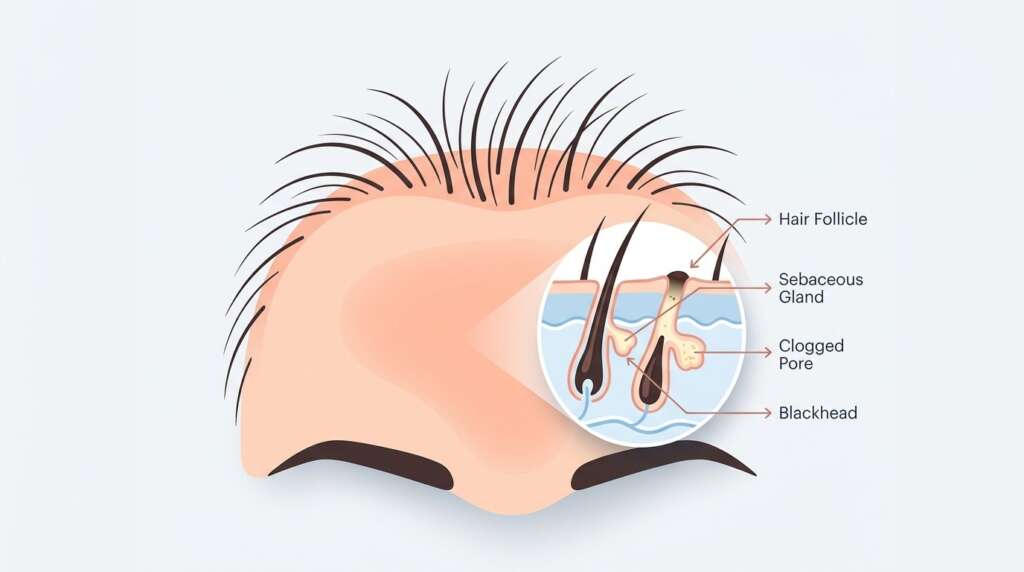
Sebaceous glands are the small oil producing structures attached to hair follicles beneath your skin. Their job is to release sebum, a natural waxy oil that keeps your skin hydrated and protected.
When these glands produce more sebum than your skin needs, that excess oil pools inside your follicles, mixes with dead skin cells, and creates the ideal environment for a clog to form.
How Pores Become Clogged on the Forehead?
Excess sebum and dead skin cells accumulate inside a hair follicle forming a plug. When that plug sits open at the surface and oxidizes it turns dark and becomes a blackhead. When it remains closed beneath the skin it becomes a whitehead.
When acne causing bacteria called Cutibacterium acnes multiply inside that blocked follicle your immune system responds with inflammation producing the red swollen sometimes painful bumps most people associate with acne.
The horizontal surface of the forehead also means gravity pulls oils, sweat, and product residue downward throughout the day, increasing buildup along the hairline.
What Causes Acne on Your Forehead?
Forehead acne rarely has a single cause. In most cases it is the result of several overlapping triggers that need to be identified and addressed together.
Hormonal Fluctuations and Androgen Spikes
Androgens, a group of hormones that includes testosterone, stimulate the sebaceous glands to produce more sebum. When androgen levels spike during puberty, before a menstrual cycle, during pregnancy, or because of conditions like polycystic ovary syndrome (PCOS) oil production increases and breakouts often follow.
Stress does not directly cause acne but it causes the body to release cortisol a stress hormone that signals the sebaceous glands to ramp up oil production.
This is why breakout flares so often coincide with stressful periods at work, school, or in personal life.
Hair Products and Pomade Acne Along the Hairline
Styling products including gels, mousses, pomades, dry shampoos, leave in conditioners, and hair oils often contain comedogenic ingredients that clog pores. When these products migrate forward onto the forehead during the day or overnight they deposit a pore blocking film onto the skin.
This specific type of breakout is called pomade acne. It clusters along the hairline and upper forehead rather than the center of the face. Common comedogenic ingredients in hair products include mineral oil, cocoa butter, coconut oil, beeswax, lanolin, and isopropyl myristate.
Headwear, Friction, and Acne Mechanica
Hats, helmets, headbands, and tight scarves create acne mechanica. Repeated friction and pressure traps sweat, heat, oil, and bacteria against the skin, damaging the follicle wall and making blockages more likely.
If your breakouts cluster exactly where your headwear sits this is likely a significant factor.
Diet, Dairy, and the Gut Skin Connection
Foods that cause rapid blood sugar spikes, including white bread, sugary drinks, and processed snacks increase insulin levels. Higher insulin stimulates androgen activity which drives up sebum production.
High glycemic diets are consistently associated with higher rates of acne in research. Dairy particularly skim milk has also been identified in several studies as a potential acne trigger.
Emerging research on the gut skin axis also suggests that people with acne tend to have less diverse gut microbiomes which may influence skin bacterial balance and systemic inflammation.
Teen vs. Adult Forehead Acne: Key Differences
Teen forehead acne is almost always driven by the hormonal surge of puberty, causing widespread T zone oiliness and multiple breakout types appearing simultaneously. Adult forehead acne is more likely tied to specific identifiable triggers hair product migration, headwear friction, cyclical hormonal shifts, or reactivity to skincare products.
Adult skin can also be more sensitive to actives meaning the concentrations that worked in teen years may now cause more irritation. Identifying personal triggers is more important than simply reaching for the strongest OTC product available.
Types of Forehead Acne: How to Identify What You Have
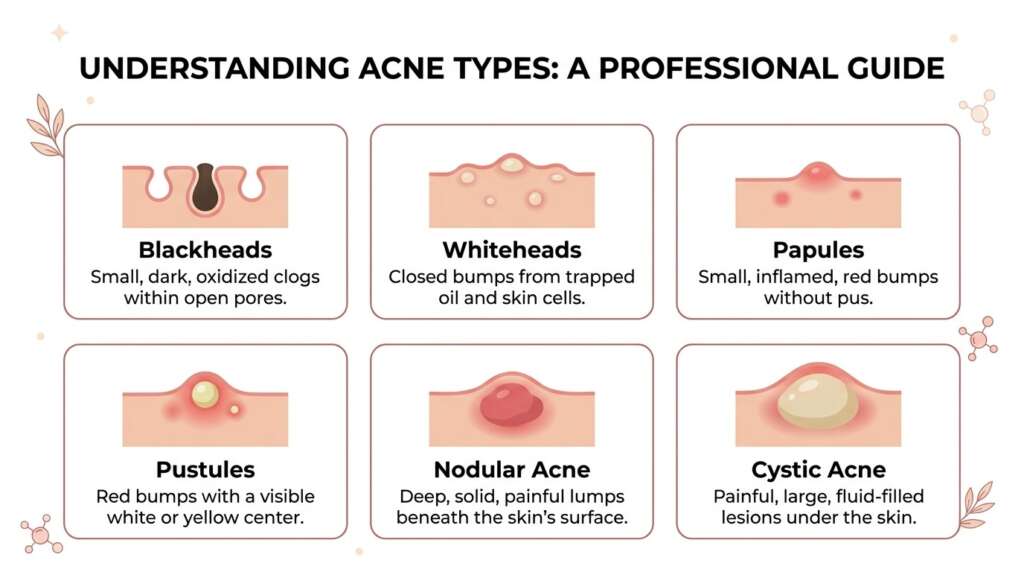
Not all forehead breakouts are the same, and the type determines which treatment will actually work.
Blackheads
Blackheads are open comedones. The follicle is clogged but the pore remains exposed to air causing oxidation that turns the debris dark. They respond well to salicylic acid.
Whiteheads
Whiteheads are closed comedones. The follicle is fully blocked beneath the skin with no oxidation, so the bump remains white or flesh colored. Salicylic acid and topical retinoids are both effective.
Papules
Papules are small, raised red bumps without visible pus. They form when a blocked follicle wall ruptures and surrounding skin becomes inflamed. Benzoyl peroxide and niacinamide reduce inflammation and bacterial activity here.
Pustules
Pustules are similar to papules but have a white or yellow pus filled center. Benzoyl peroxide spot treatments are particularly effective for this type.
Nodular and cystic acne
Nodular and cystic acne develop deep beneath the skin, are often painful, do not come to a head, and can persist for weeks. These carry a high risk of post acne scarring and typically require prescription treatment.
Forehead Acne vs Fungal Acne: How to Tell the Difference?
Fungal acne technically called Malassezia folliculitis is caused by an overgrowth of yeast rather than bacteria. It is frequently misdiagnosed because it resembles regular acne visually.
Key differences:
- Fungal acne presents as very uniform small, itchy bumps of the same size in clusters. Regular acne varies more in size and type.
- Fungal acne is often itchy. Bacterial acne is generally not.
- Fungal acne does not respond to benzoyl peroxide or salicylic acid and often worsens with oil based skincare because yeast feeds on fatty acids.
- Treatment requires antifungal ingredients such as zinc pyrithione or prescription antifungal medications not standard acne actives.
If your forehead breakouts itch, appear unusually uniform, and have not improved with consistent OTC treatment, consult a dermatologist before continuing.
How to Treat Forehead Acne: Ingredients That Actually Work?
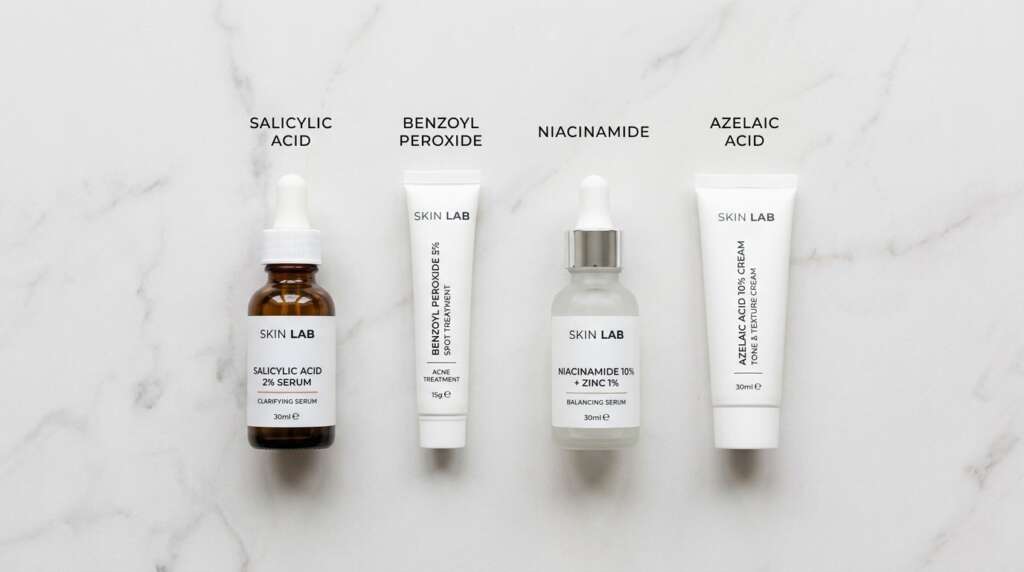
The ingredients below are supported by dermatological research and are available in both OTC and prescription formulations. The right choice depends on your breakout type.
Salicylic Acid vs Benzoyl Peroxide: Which to Use and When?
Salicylic acid is a beta hydroxy acid (BHA) that is oil soluble, meaning it penetrates into sebum filled follicles and dissolves the plug of oil and dead skin cells.
It is most effective for blackheads, whiteheads, and rough bumpy texture. It is also a good preventive ingredient to keep pores clear.
Benzoyl peroxide kills Cutibacterium acnes bacteria by releasing oxygen into the follicle. It is most effective for inflamed papules and pustules but does not dissolve existing clogs the way salicylic acid does. Because it can be drying it works best as a targeted spot treatment or a wash off cleanser rather than a leave on product.
These two can be used together, but use benzoyl peroxide in the morning and retinoids at night to avoid deactivating each other.
Niacinamide and Azelaic Acid for Inflammation and Dark Spots
Niacinamide (vitamin B3) reduces sebum production, calms redness and inflammation, strengthens the skin barrier, and fades post acne dark spots. It is well tolerated by almost all skin types including sensitive skin and is one of the best supporting ingredients in any forehead acne routine.
For a focused look at niacinamide formulations, see our guide on The Ordinary niacinamide for acne-prone skin.
Azelaic acid targets multiple acne pathways in one ingredient. It has antimicrobial, anti inflammatory, and melanin inhibiting properties making it especially valuable for both active breakouts and fading the dark spots they leave behind.
It is available OTC at around 10% and by prescription at 15% to 20%.
Retinoids for Persistent or Recurring Forehead Breakouts
Retinoids are vitamin A derivatives that speed up skin cell turnover, preventing the dead cell buildup that leads to clogged follicles. They also reduce inflammation and fade post acne marks with continued use.
The most accessible OTC retinoid is adapalene 0.1% (Differin). It is effective for both non inflammatory and inflammatory acne and better tolerated than prescription tretinoin.
Introduce retinoids slowly, starting two to three nights per week, and always use sunscreen daily when on a retinoid.
When to Consider Prescription Treatments
If deep, cystic, or persistent forehead acne does not respond after several months of consistent OTC use, a dermatologist visit is the appropriate next step. Prescription options include topical tretinoin or tazarotene topical antibiotics like clindamycin hormonal treatments such as spironolactone for women, and isotretinoin for severe cases.
Ingredient Comparison Table
| Ingredient | Best For | How It Works | Key Caution |
| Salicylic acid | Blackheads, whiteheads, texture | Dissolves oil and dead cell plugs in pores | Can over dry sensitive skin |
| Benzoyl peroxide | Papules, pustules, bacterial acne | Kills C. acnes via oxygen release | Bleaches fabric; drying at higher strengths |
| Niacinamide | Inflammation, oiliness, dark spots | Regulates sebum, calms barrier, inhibits melanin | Very well tolerated by most skin types |
| Azelaic acid | Inflammation, bacteria, PIH | Antimicrobial, anti inflammatory, brightening | May cause mild tingling on sensitive skin |
| Adapalene (OTC) | Persistent or recurring acne | Speeds cell turnover, prevents clogged pores | Increases sun sensitivity; introduce slowly |
| Tretinoin (Rx) | Moderate to severe acne, marks | Stronger cell renewal, anti inflammatory | Requires dermatologist guidance |
How Forehead Acne Varies by Skin Type?
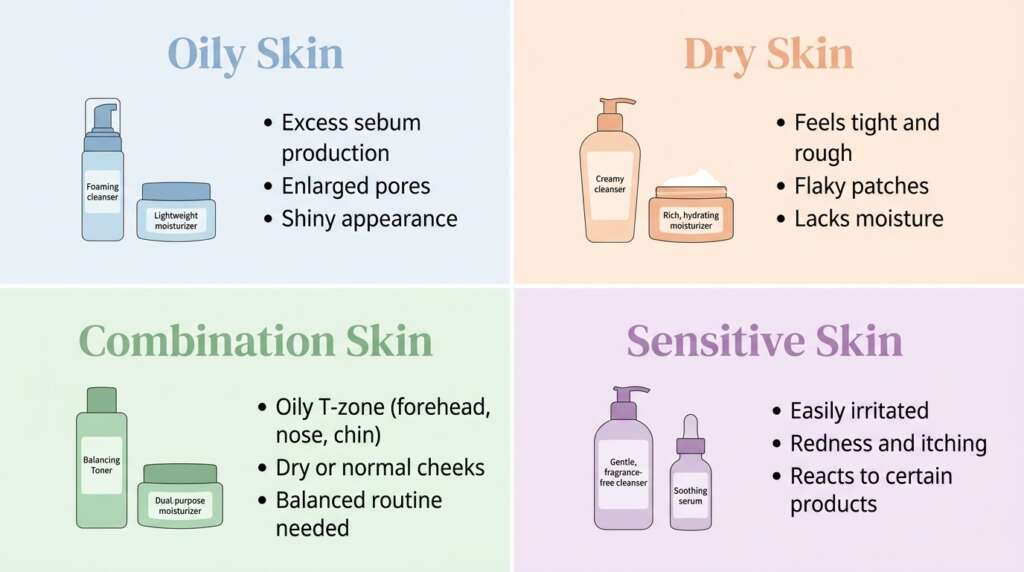
Skin type plays a major role in both how forehead acne develops and which treatment approach will work best. What clears breakouts on oily skin may cause significant irritation and dryness on sensitive or dry skin.
Oily Skin
People with oily skin tend to experience forehead acne most frequently and most visibly. The sebaceous glands are already overactive the T zone is naturally shiny, and pores are more likely to stay congested.
For oily skin, a foaming or gel based cleanser with salicylic acid used twice daily is a strong starting point. Lightweight, non comedogenic moisturizers are still important as skipping hydration can actually signal the skin to produce more oil.
Oil free, water based moisturizers with niacinamide work well here. Benzoyl peroxide spot treatments or a low concentration benzoyl peroxide wash are appropriate for inflamed breakouts.
Dry Skin
Forehead acne on dry skin is less common but does occur often triggered by hormonal shifts, hair products, or irritation from certain topical products. On dry skin using harsh cleansers or high concentrations of actives like salicylic acid can strip the skin barrier further triggering a compensatory increase in oil production and worsening acne.
A gentle, non foaming low pH cleanser is better suited here. Niacinamide is a particularly good choice because it addresses both acne and barrier support. Azelaic acid at lower concentrations is another gentle option.
Retinoids should be introduced very slowly and buffered with a moisturizer if needed.
Combination Skin
Combination skin typically presents with an oily T zone and drier or more normal cheeks. For forehead acne in this case targeted treatment is more effective than blanket application. Using a salicylic acid toner or treatment only across the forehead rather than the full face avoids over drying the cheeks.
A lightweight gel moisturizer applied all over, with a slightly richer product on cheeks only balances the approach without adding unnecessary oil to the forehead zone.
Sensitive Skin
Sensitive skin reacts easily to active ingredients and may experience redness, stinging, or flaking even with products formulated for acne prone skin. For forehead acne on sensitive skin the priority is to treat without aggravating the skin barrier.
Niacinamide and low concentration azelaic acid (10%) are two of the best options because both are effective and far less likely to cause irritation than salicylic acid or benzoyl peroxide at standard concentrations.
Fragrance free minimal ingredient formulations are strongly preferred. Patch testing any new product before full application is especially important.
How to Build a Skincare Routine for Forehead Acne?
A consistent daily routine is more effective than any single product. The goal is not to use the most aggressive ingredients available but to use the right ingredients in the right order for your skin type and breakout pattern.
Morning Routine for Oily and Combination Skin
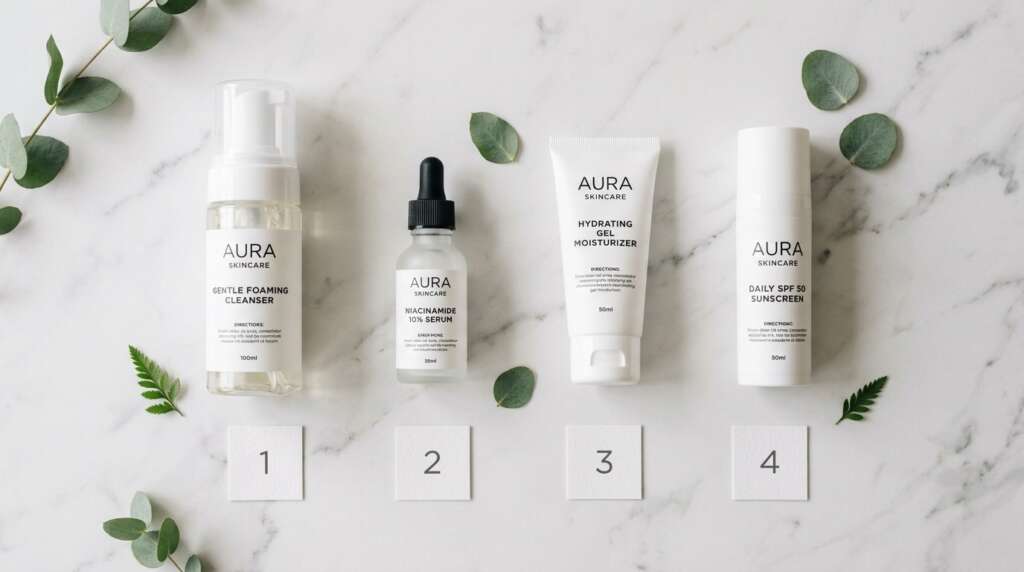
A simple four step morning routine keeps excess oil controlled, pores clear, and skin protected throughout the day. Consistency matters more than product count.
Step 1: Cleanse
Use a gentle, low pH foaming cleanser or a salicylic acid cleanser. Avoid anything that leaves skin feeling tight or squeaky, as that signals over stripping.
Step 2: Treatment (optional in AM)
Apply a niacinamide serum across the forehead and full face. Niacinamide in the morning helps regulate sebum throughout the day and preps the skin barrier before sun exposure.
Step 3: Moisturize
Apply a lightweight, oil free, non comedogenic gel moisturizer. Even oily skin needs hydration.
Step 4: Sunscreen
Apply a broad spectrum SPF 30 or higher. This step is non negotiable, particularly if you are using any active ingredients.
Look for labels that say oil free, non comedogenic, or mattifying. Mineral sunscreens with zinc oxide have the added benefit of being anti inflammatory.
Evening Routine to Clear Clogged Pores Overnight
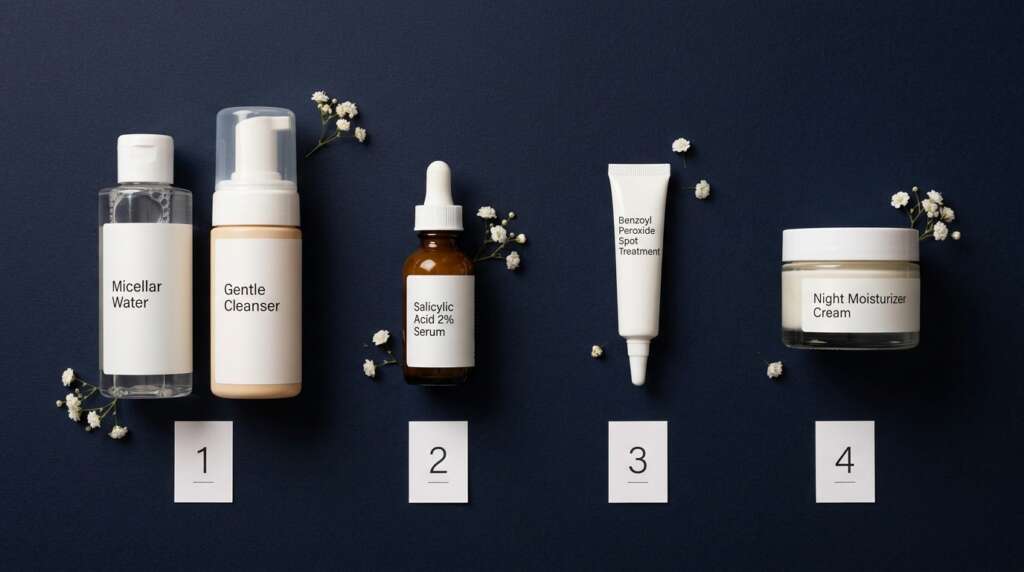
Nighttime is when skin repairs itself. A targeted evening routine removes daily buildup, delivers active ingredients, and allows treatments to work without interference from sunscreen or sweat.
Step 1: Double cleanse (if wearing sunscreen or makeup)
Begin with a micellar water or gentle cleansing balm to remove sunscreen, makeup, and surface residue. Follow with your regular cleanser to clean the skin itself.
Step 2: Exfoliation or treatment
Apply your chosen active ingredient. If you are using a salicylic acid toner or serum, apply it here. If you are using a retinoid, apply it on nights you have designated for retinoid use (start at two to three nights per week).
Do not use salicylic acid and a retinoid in the same step on the same night if your skin is new to actives.
Step 3: Spot treat
Apply benzoyl peroxide spot treatment directly onto active papules or pustules only, not across the entire forehead.
Step 4: Moisturize
Apply your moisturizer. On nights you use a retinoid, moisturizing immediately after application (sometimes called the sandwich method applying moisturizer before and after the retinoid) can buffer irritation while your skin adjusts.
Adjustments for Sensitive or Dry Skin
Replace salicylic acid cleansers with a fragrance free, non foaming gentle cleanser. Swap benzoyl peroxide for a targeted azelaic acid treatment instead. Introduce any retinoid very slowly starting once per week.
Always patch test new products on a small area of the forehead before full application. Prioritize barrier repair ingredients including ceramides, panthenol, and squalane in your moisturizer.
How to Prevent Forehead Acne From Coming Back?
Clearing existing breakouts is only half the work. Preventing new ones requires identifying and addressing the specific triggers that apply to your lifestyle.
How to Read Hair Product Labels for Comedogenic Ingredients?
This step alone resolves many cases of stubborn hairline and forehead acne. Before purchasing any hair styling or conditioning product.
Check the ingredient list for the following commonly comedogenic ingredients:
- Mineral oil
- Coconut oil (highly comedogenic)
- Cocoa butter
- Beeswax and carnauba wax
- Lanolin
- Sodium lauryl sulfate at high concentrations
- Isopropyl myristate
- Certain silicones (cyclomethicone is generally considered low risk; dimethicone is moderate)
When applying styling products keep them away from the hairline and forehead. If unavoidable shield the forehead with your hand or a clean tissue during application.
Wash off any residue that reaches the skin and always cleanse the forehead thoroughly each evening.
Pillowcase, Phone, and Lifestyle Habits That Reduce Breakouts
Small daily habits accumulate into significant results over time.
The following practices have a direct impact on forehead breakout frequency:
- Change pillowcases at least twice per week. Pillowcases absorb oil, sweat, hair product residue, and bacteria from your hair and skin. Sleeping on a fresh pillowcase consistently reduces recontamination.
- Keep your hands away from your forehead. Every time your fingers touch your face, they transfer surface bacteria and oil directly into pores.
- Wipe down workout equipment, headbands, and hat brims regularly. These surfaces collect sweat and bacteria that transfer to the forehead during use.
- Shower and cleanse the face immediately after heavy exercise. Sweat sitting on the skin for extended periods accelerates pore blockage.
- If you wear bangs, consider pulling them back during sleep. Hair sitting against the forehead overnight deposits oil and product residue directly onto the skin.
How to Fade Post Acne Dark Spots Left on the Forehead?
Post inflammatory hyperpigmentation (PIH) is the flat discolored mark left behind after a pimple heals. It is not a scar but a temporary increase in melanin triggered by inflammation. It is particularly pronounced in medium to deep skin tones.
The most effective ingredients for fading PIH on the forehead include:
- Niacinamide: Inhibits the transfer of melanin to skin cells gradually fading dark spots with consistent use.
- Azelaic acid: Reduces melanin production and is one of the few PIH treatments considered safe during pregnancy.
- Vitamin C (ascorbic acid or stabilized derivatives): A potent antioxidant that brightens skin tone and inhibits melanin synthesis. Use in the morning under sunscreen.
- Retinoids: Speed up skin cell turnover which accelerates the shedding of pigmented cells and brings fresher skin to the surface more quickly.
- Daily SPF: This is the single most important step for fading PIH. UV exposure dramatically slows the fading process and can permanently darken existing marks. Sunscreen every day regardless of weather is essential.
For more information on fading dark marks left by acne, see our detailed guide on hyperpigmentation treatment for acne-prone skin.
Related Reading on TheOutsetSkincare.com
- For a detailed breakdown of one of the most effective pore clearing acids read our guide to salicylic acid moisturizers for acne-prone skin.
- To understand how actives like niacinamide, azelaic acid, and retinoids work together, see our overview of key skincare ingredients for breakout-prone skin.
- For a focused look at one of the best budget friendly niacinamide options, visit our review of The Ordinary niacinamide serum.
- For a full breakdown of a gentle multi tasking acid, read our article on azelaic acid from The Ordinary.
- For a broader look at the skin issues most people face and how to address them, visit our guide to common face skin concerns.
Conclusion
Forehead acne is one of the most treatable skin concerns when you understand what is actually driving it. The T zone is naturally oil prone, and the forehead faces a unique set of daily pressures from hair products, headwear, stress hormones, and environmental buildup.
None of these triggers are permanent, and none require a complicated response. Starting with a consistent gentle cleanse, choosing the right active ingredient for your breakout type, and identifying your personal triggers is more effective than layering multiple products at once.
For further guidance on building a routine, explore our guides on key skincare ingredients for breakout-prone skin and salicylic acid options for acne-prone skin.
For clinical references on acne pathology, the National Institutes of Health and the American Academy of Dermatology provide thorough evidence based resources.
This page does not provide medical advice; it is just meant to be informative. Consult a dermatologist for personal skin concerns.
FAQs
What causes acne on the forehead?
Forehead acne forms when excess sebum, dead skin cells, and bacteria clog hair follicles in the oil dense T zone. Common triggers include hormonal changes, hair products, stress, headwear friction, and inconsistent cleansing habits.
Is forehead acne hormonal?
It can be. Androgen spikes during puberty, periods, or pregnancy increase oil production and cause breakouts. If your forehead acne follows a monthly cycle hormones are likely involved.
Can hair products cause forehead acne?
Yes Comedogenic ingredients in gels, oils, and leave in conditioners migrate onto the forehead and clog pores. This is called pomade acne and typically clusters along the hairline rather than the center of the forehead.
How do I know if my forehead acne is fungal or bacterial?
Fungal acne appears as uniform, itchy small bumps that do not respond to benzoyl peroxide. Bacterial acne varies in size and is not itchy. A dermatologist can confirm which type you have.
How long does forehead acne take to clear up?
Mild to moderate forehead acne typically improves within four to eight weeks of consistent OTC treatment. Deeper breakouts and dark spots may take three to six months to fully resolve.
Does diet affect forehead acne?
High glycemic foods and dairy can trigger excess oil production in acne prone individuals. Reducing processed sugars and skim milk is a reasonable step if topical treatments alone are not fully effective.